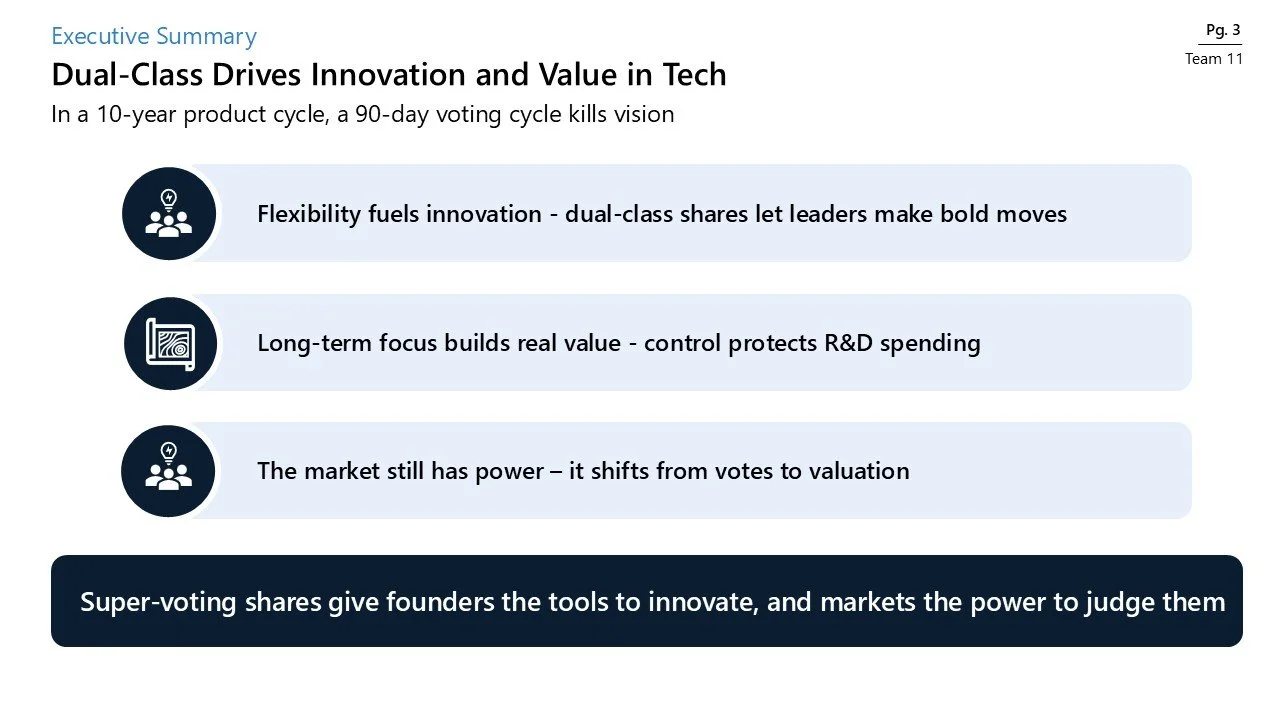
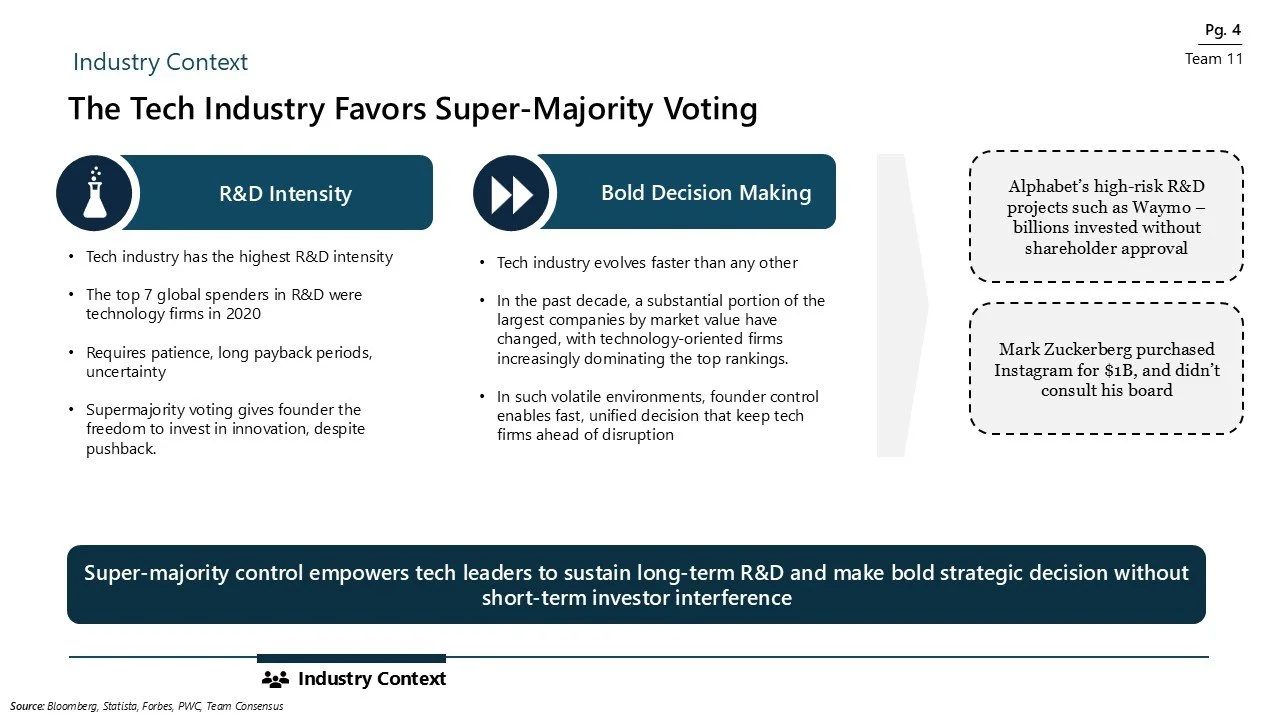
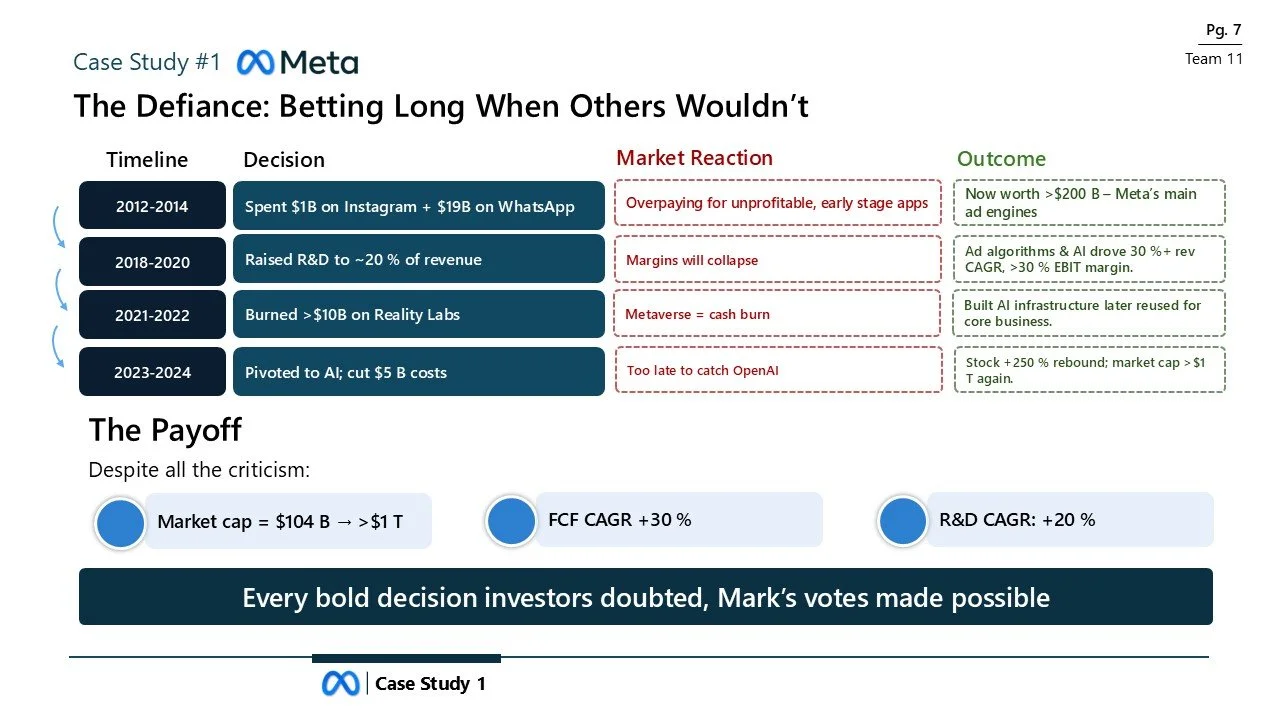
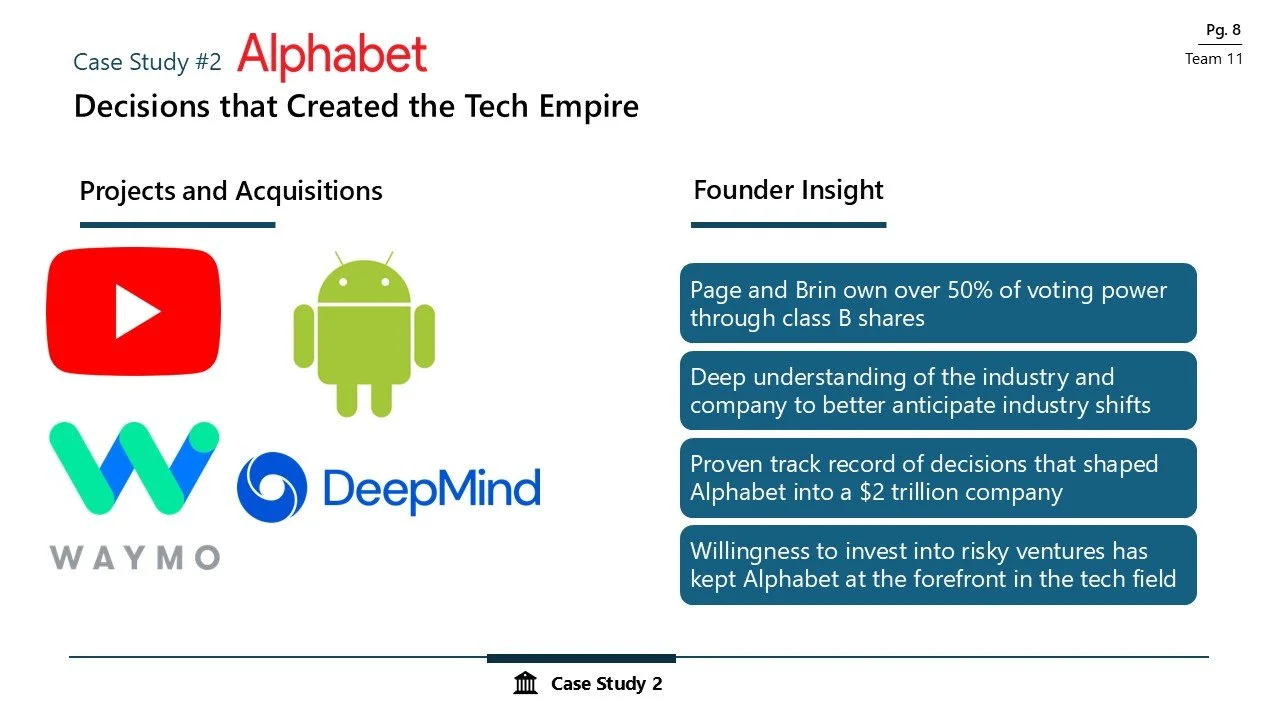
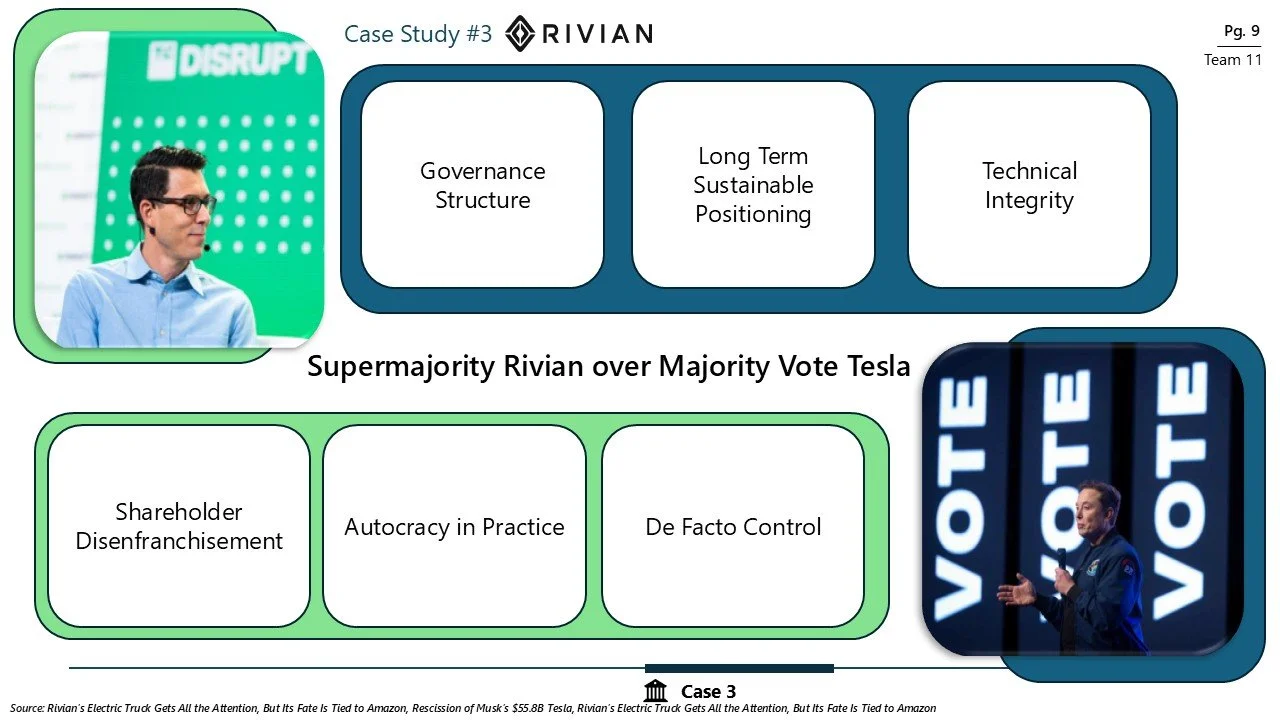
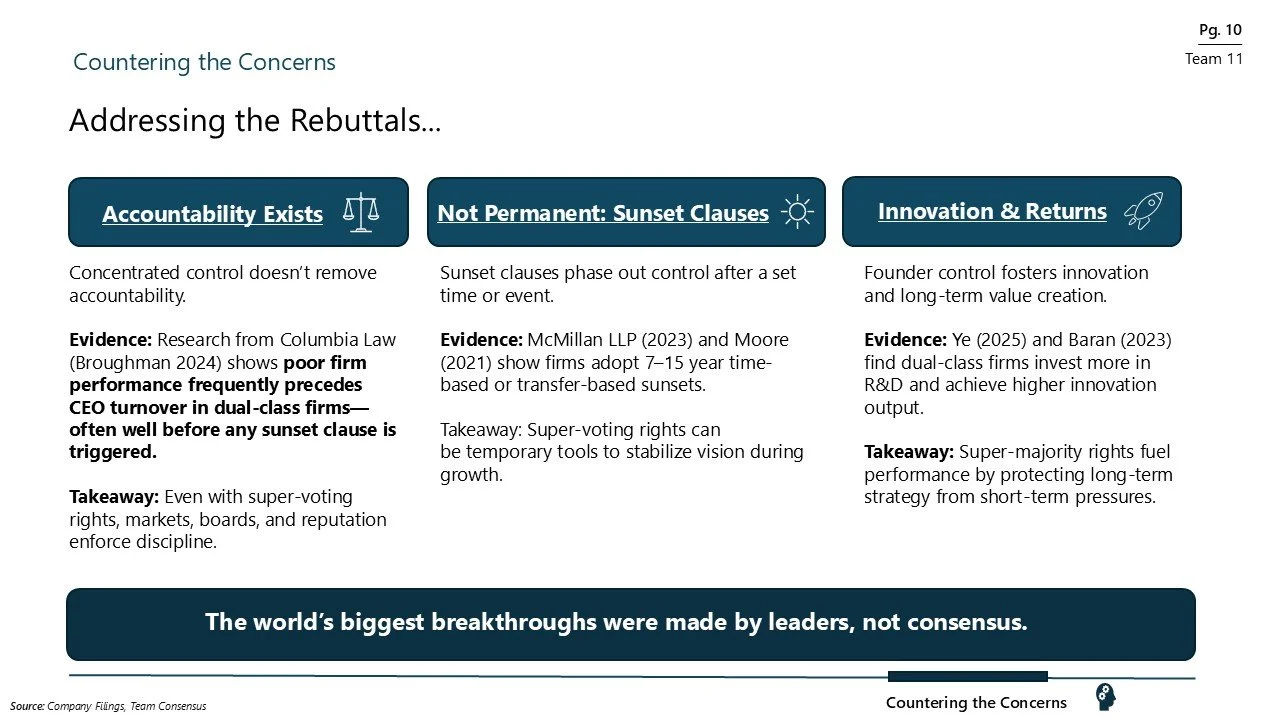
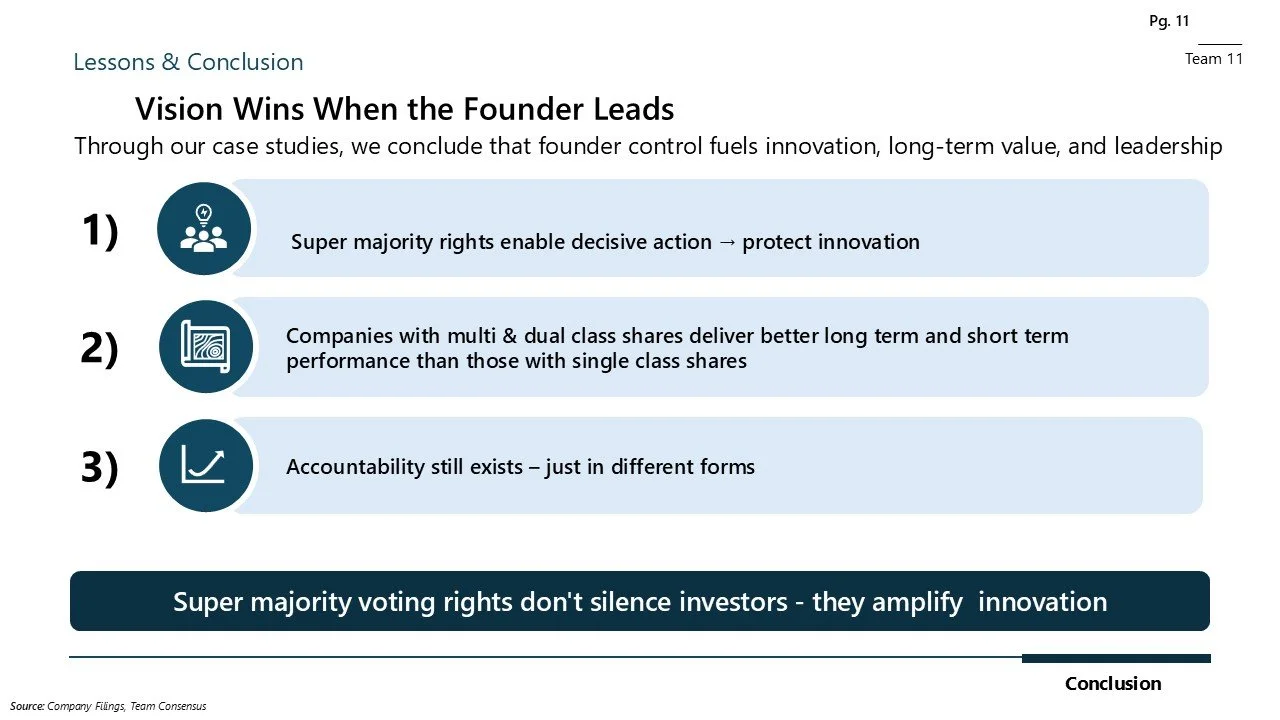
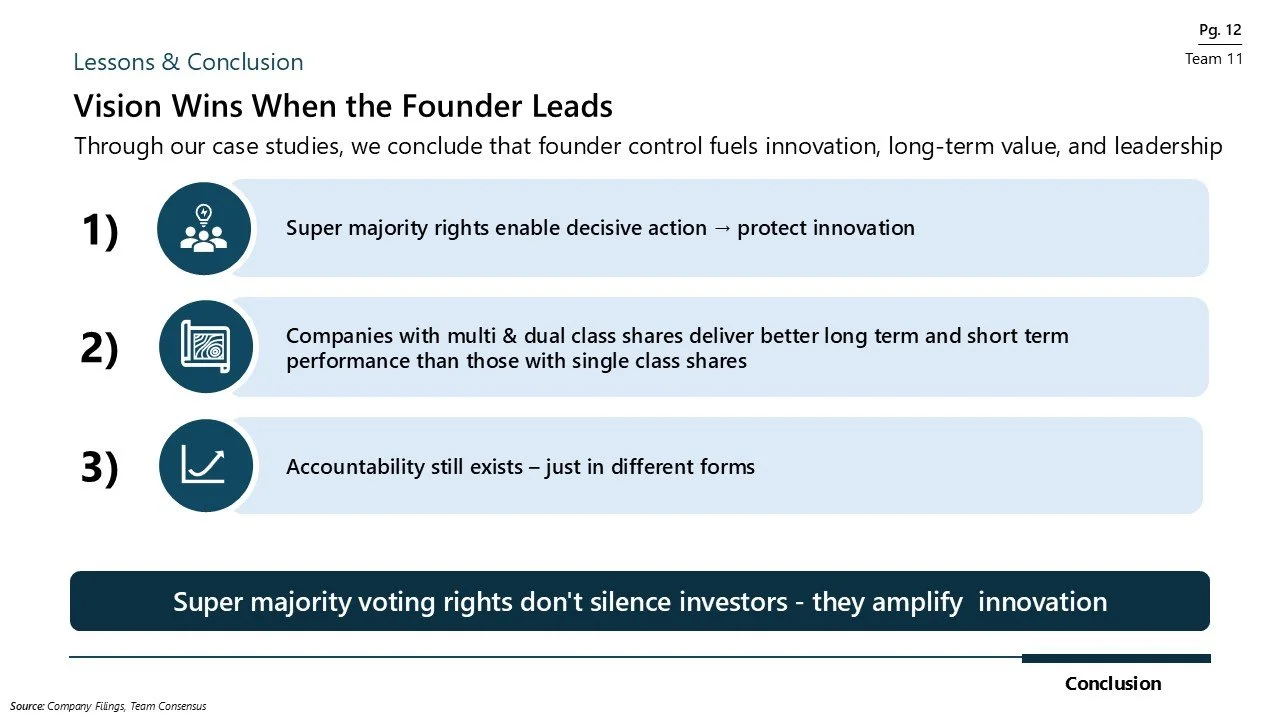
This presentation examined whether super-majority and dual-class voting structures enhance or erode long-term shareholder value in technology firms. The analysis combined governance theory with real market outcomes, using Meta, Alphabet, and Rivian as case studies to trace how concentrated founder control influences capital allocation, R&D intensity, and strategic risk-taking. We evaluated dual-class structures through agency theory, fiduciary duty, and market discipline, and tested common criticisms around accountability, entrenchment, and shareholder disenfranchisement. The project concluded that, when paired with market discipline and sunset mechanisms, super-voting rights can protect long-term innovation and value creation in industries with high uncertainty and long investment cycles.